The unit is mandated to undertake the following functions;
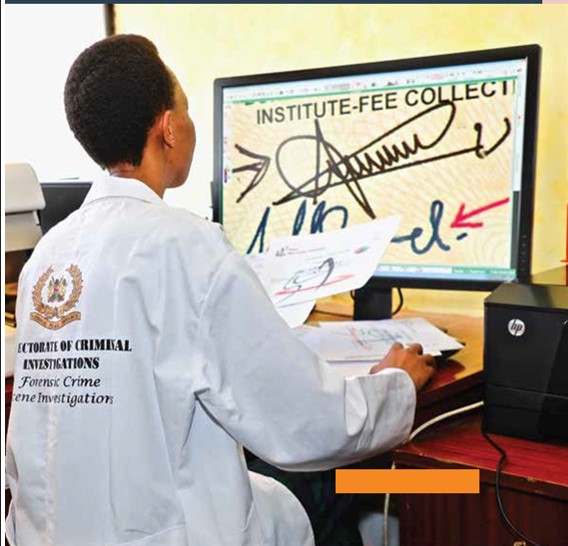
i. Forensic analysis of handwriting and signatures
ii. Forensic analysis of imaging technology (photocopy/scanning)
iii. Forensic analysis of forged passports and travel documents
iv. Forensic analysis of computer prints; type writer prints and printing methods
v. Forensic analysis of forged financial transaction documents
vi. Forensic analysis of credit cards
vii. Forensic analysis of indented writing
viii. Forensic analysis of counterfeit currencies notes
ix. Forensic examination of alterations, erasures and obliterations in documents
x. Forensic analysis of seals and stamp impression
xi. Forensic ink and paper analysis
xii. Advising investigators on the method of investigations of forged documents
xiii. Provision of apprenticeship training to document examination trainees
xiv. Giving lectures in police training institutions
xv. Preparation of reports and giving of expert opinion in Courts
xvi. Performing any other functions that may be referred to it by the Director Forensics
The Unit consists of the following sub-units:
a) Mechanical And Electronic Impressions
i. Examination of stamps
ii. Examination of seals
iii. Source attribution
iv. Physical matching.
v. Meta data analysis
b) Indented and altered document expert
i. Examination of Erasures:
ii. Examination of Additions/Obliterations:
iii. Examination of Page Substitutions:
c) Handwriting and signatures expert
i. Examination of signatures
ii. Examination of handwritings
iii. Identify forged, simulated or disguised handwritings or signatures
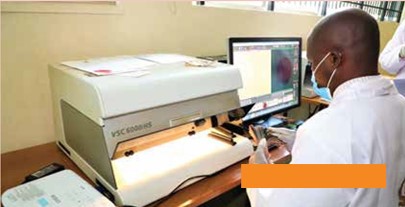
d) Conventional Printing and Paper Examination
i. Examination of photocopying papers
ii. Examination of prints
iii. Examination of printings process
iv. Determination of age of the paper
v. Ink analysis
e) Internal Quality Assurance
i. Monitoring and Evaluation
ii. Ensuring Consistency and Compliance
iii. Support and Development
iv. Administration and Reporting
f) Security Document Examination
i. Examination of counterfeit currencies.
ii. Examination of bank cheques
iii. Examination of passports and travel documents.
iv. Examination of credit cards.
v. Authenticity verification.