The unit is mandated to undertake the following functions;
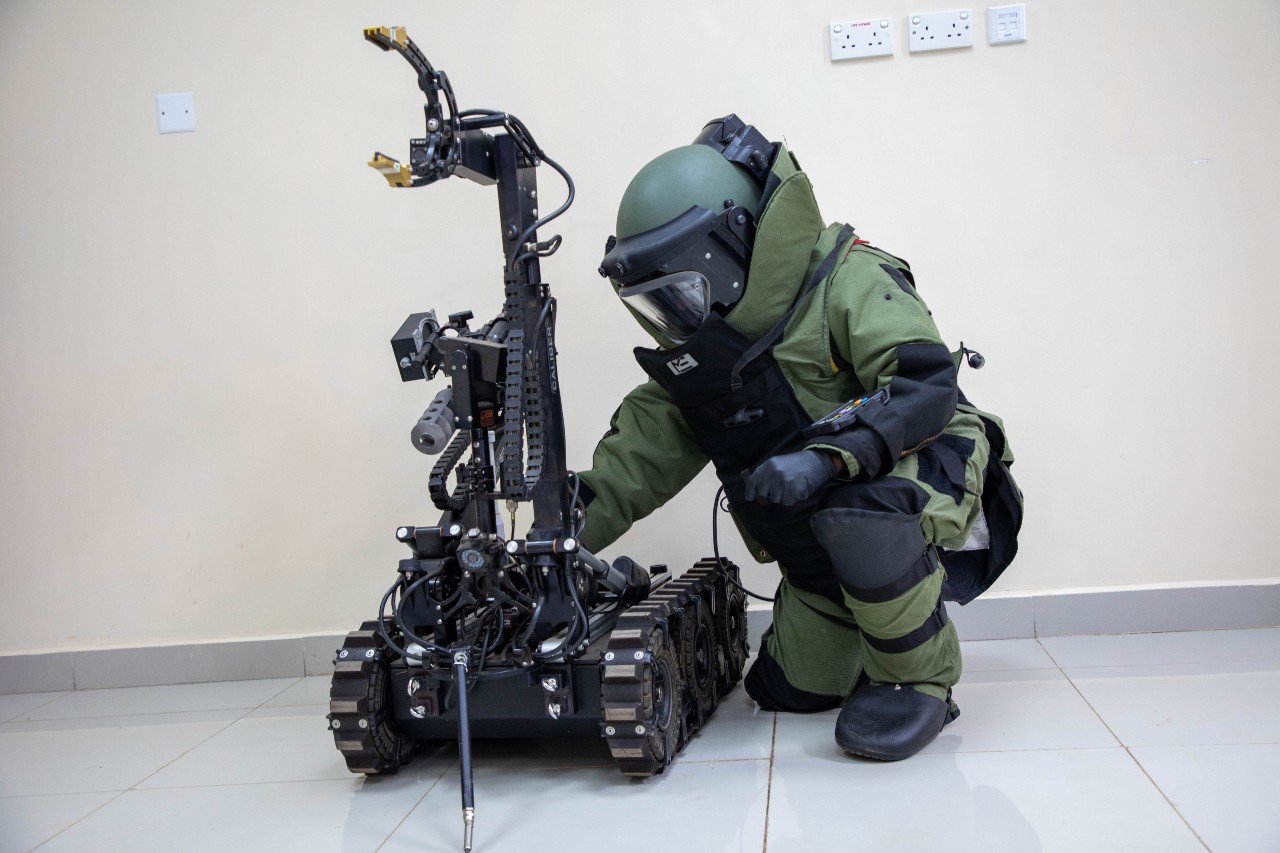
i. Responding to all Bomb threats in Kenya
ii. Render safe Improvised Explosive Devices
iii. Forensic examination of explosive exhibits
iv. Post-blast Investigation and IED reconstructions.
v. Disposal of unexploded bombs (UXO) and recovered explosives
vi. Bomb sweeps in VIP/VVIP/Mega public functions
vii. Giving expert opinion in court on matters to do with improvised explosive devices (IEDs)
viii. First responders to Chemical, Biological, Radiological and Nuclear (CBRN) events/Dirty bombs
ix. Training other law enforcement agencies on explosives
x. Performing any other functions that may be referred to it by the Director Forensics or the Director of Criminal Investigations
The Unit consists of the following sub-units:
a) Counter IED, UXOs and IED Reconstruction work station.
i. Perform render safe procedures
ii. X-ray and X-ray image interpretation
iii. IED reconstruction
iv. IED model construction
v. Device identification
vi. Respond to bomb threats
vii. Disposal of explosive ordinances
b) Evidence recovery and Post Blast Investigations (PBI)
i. Perform post blast and post-render safe investigations
ii. Bomb scene reconstruction and processing
iii. Evidence documentation, collection, packaging, transportation and safe custody of explosive evidence
iv. Explosive identification
v. Report writing
vi. Perform forensic explosive identification and examination
vii. Preparing expert reports
viii. Disposal of explosive exhibits
c) Bomb data center
i. Keep account of all Bomb related incidences within the country
ii. Mapping of IED and UXO vulnerable zones in the country
iii. Determine bomb threat trends within the country
iv. Receive and compile weekly, monthly and annual bomb incidences
v. Assist during resource allocation based on the data
vi. Maintain inventory of all bomb equipment, explosives, furniture and Bomb sweeps
d) CBRN
i. Respond to CBRN incidences
ii. Advisory roles
iii. Perform CBRN security checks on major public events
vi. Forensic examination and analysis of CBRNE
v. Assist in disposal of CBRNE materials
e) Training and research
i. Conduct lectures and awareness to other law enforcement agencies and the public
ii. develop training manuals and curriculums for the unit and other law enforcement agencies
iii. Research on new terrorist device trends
iv. Development and updating of training and response SOPs
v. Identify training needs and lapses during response and develop actionable response plans
vi. Conduct training, recertification and retraining courses for B&HMDU personnel